
Introduction
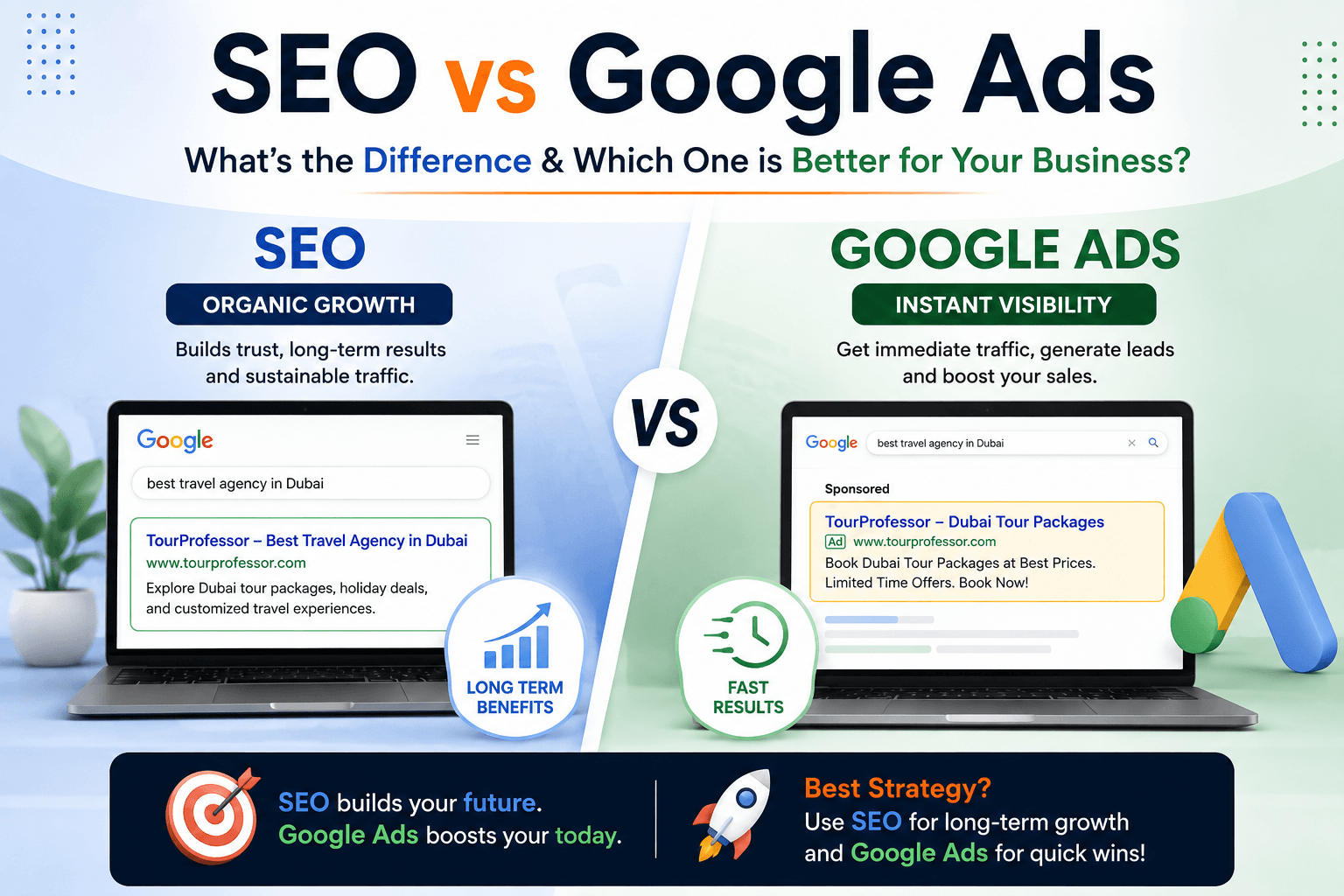
Actually, SEO VS Google Ads both are working for different needs. SEO is the best solution for Google to rank your content organically on top positions, but it is a long-term process and increases your site’s trustability.
On the other hand, Google Ads is a tool used for marketing. It helps you reach your targeted audience very quickly and explains to people about your purpose based on the campaign setup, and helps you to increase sales earlier.
For small businesses, there is no single “better” option—SEO and Google Ads serve different purposes.
SEO is a long-term investment. It builds your visibility slowly but steadily, bringing free, organic traffic over time. Once you rank, you can get consistent visitors without paying for every click. It’s ideal for building trust, authority, and long-term growth.
Google Ads, on the other hand, gives immediate visibility. You pay to appear at the top of search results and can start getting leads or sales from day one. But the moment you stop paying, the traffic stops too.
So, the real answer is simple:
If you want fast results and quick sales, use Google Ads.
If you want stable, long-term growth, invest in SEO.
And if you’re smart, you use both together—Ads for immediate results, SEO for future strength.
What is the difference between SEO and Google Ads, and which one is better for my business?
| Feature | SEO (Search Engine Optimization) | Google Ads (Paid Advertising) |
|---|---|---|
| Cost | Free traffic (no cost per click) but needs time and effort | Paid (you pay per click or impression) |
| Speed of Results | Slow (takes weeks or months) | Instant (ads go live immediately) |
| Position on Google | Organic search results | Top “sponsored” results |
| Sustainability | Long-term and stable traffic | Stops when you stop paying |
| Trust Level | Higher trust from users | Lower trust (users know it’s an ad) |
| Targeting | Based on content and keywords | Highly precise (location, age, interests, keywords) |
| Control | Limited control over ranking | Full control over budget and targeting |
| Best For | Blogs, branding, long-term growth | Sales, leads, promotions, quick results |
Which one is better for your business?
There is no single chooise—it depends on your goal.
- If you want fast sales, bookings, or leads → Google Ads is better
- If you want long-term traffic, trust, and brand growth → SEO is better
- If you want maximum growth → use both together
👉 Simple expert advice:
Google Ads brings customers today, SEO brings customers every day in the future.
SEO VS Google Ads: Full SEO Explanation & proper Solution
The first thing is that SEO and Google ADS are Totally different things.
SEO is a long-term strategy that helps your website rank organically in Google search results, while Google Ads is paid advertising that can place your website at the top of search results almost instantly.
SEO builds sustainable traffic, authority, and brand trust over time, making it ideal for blogs, informational websites, and businesses focused on long-term growth.
On the other hand, Google Ads is best for e-commerce stores, restaurants, travel and tour companies, and other businesses that need leads, bookings, or sales quickly. While SEO takes time to deliver results, Google Ads can generate immediate traffic and conversions as long as you continue investing in ad campaigns.
What Is SEO?
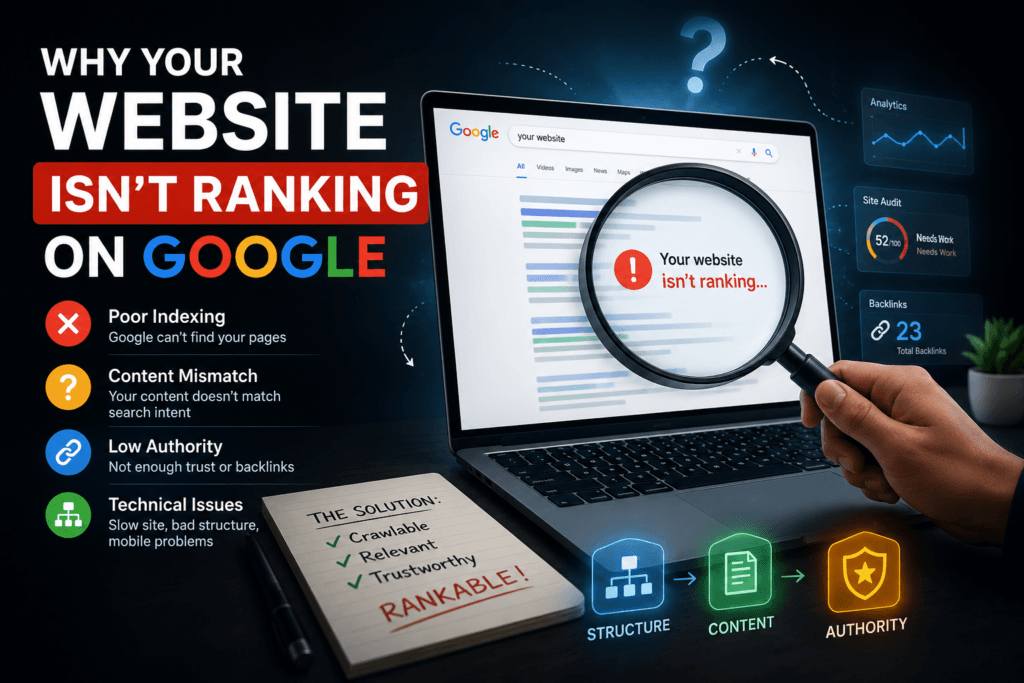
SEO (Search Engine Optimization) is the process of helping Google understand your website, content, products, services, and information more effectively. When you create a well-optimized page with a relevant title, targeted keywords, a compelling meta description, a featured image, and useful, high-quality content, you make it easier for Google to understand the purpose of your page.
Google analyzes these SEO elements to determine what your content is about, how valuable it is, and which search queries it can answer. Once Google crawls and indexes your content, it stores that information in its database and may display your page when users search for related topics.
When someone searches for a question or problem that closely matches your content, Google evaluates billions of indexed pages to find the most relevant and helpful answer. If your content provides a strong solution, offers useful information, and delivers a good user experience, it has a better chance of appearing on the first page of search results.
SEO is not just about ranking higher; it’s about helping search engines understand your content and helping users find the best answer to their questions. Since Google has billions of pages in its index, only the most relevant, trustworthy, and useful content earns top positions in search results.
Why Is SEO Important?
SEO stands for Search Engine Optimization. It is the process of improving your website or content so it can rank on Google search results.
To rank on Google, you first need to understand how Google Search and indexing work. If you don’t know how Google understands your content, it becomes very difficult to rank.
Think of it like a classroom. If you want to sit on the front bench, you need to be prepared, know the daily lessons, and perform well consistently. Good students who complete their work properly every day can stay at the front. But if someone is not prepared and cannot answer questions, they may lose that position.
In the same way, Google evaluates your content based on quality, relevance, and usefulness. If your content is well-structured, solves users’ problems, and provides valuable information, Google is more likely to rank it higher in search results.
That’s why understanding SEO is important. To become successful in digital marketing or content creation, you need to learn how search engines work and how to optimize your content properly.
Where Is SEO Used?
SEO (Search Engine Optimization) is used wherever you want your website, content, or business to show up on Google without paying for ads.
It helps people find you when they search for things related to your topic or service.
You need SEO for websites like business pages, blogs, and portfolio sites so they can get free traffic from Google.
It’s also very important for blog articles like travel guides or tips, so your content can appear when someone searches things like “Dubai travel guide” or “best places to visit in Abu Dhabi.”
On YouTube, SEO helps your videos rank by improving titles, descriptions, and tags so more people can discover your content.
In e-commerce, SEO helps product and category pages appear when users search for products like “buy travel backpack in UAE.” Even local businesses use SEO to show up on Google Maps when people search for services like “tour agency near me.”
In simple words, SEO is what helps your content get discovered naturally on Google by the right audience at the right time.
How Does SEO Work?
SEO works by helping Google understand, trust, and rank your content when someone searches for something.
First, Google crawls your website, meaning it scans your pages to see what they are about. Then it indexes your content, which means Google stores your pages in its database so they can appear in search results. After that, when someone types a search query like “Dubai travel guide,” Google quickly checks millions of pages and tries to find the most useful and relevant answer.
At this stage, SEO plays a big role. If your content has a clear title, useful information, relevant keywords, good structure, fast loading speed, and a good user experience, Google understands it better and trusts it more. Then it decides where to place your page in the search results. The better your SEO, the higher your chance to appear on the first page.
In simple words, SEO works like this: you create helpful content → Google understands it → Google compares it with other pages → and then it ranks the best and most relevant result for the user. where you gonna use it?
How many types of SEO are there, and what are they?
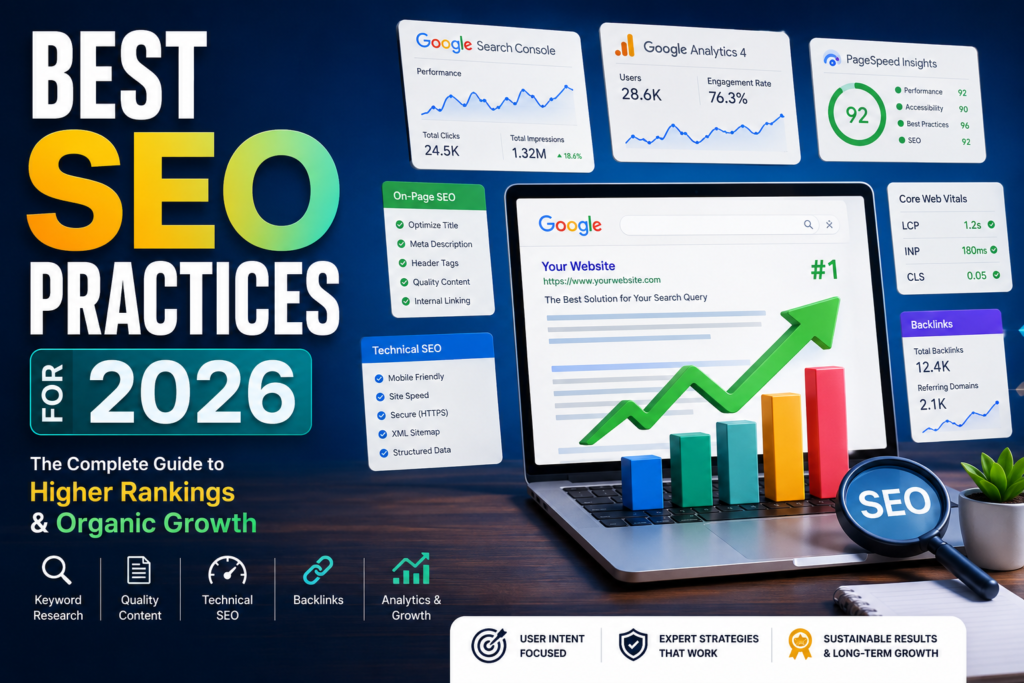
1. On-Page SEO
On-page SEO is everything you do inside your website to help Google understand your content.
It includes things like:
- Good titles and headings
- Keywords in your content
- Meta description
- Internal links
- Images with proper alt text
- High-quality, useful content
2. Off-Page SEO
Off-page SEO is everything you do outside your website to build trust and authority.
It includes:
- Backlinks from other websites
- Social media sharing
- Guest posts
- Brand mentions
3. Technical SEO
Technical SEO is about making sure your website is easy for Google to crawl and understand.
It includes:
- Fast loading speed
- Mobile-friendly design
- XML sitemap
- Secure website (HTTPS)
- Fixing errors or broken links
What is Google Ads?
Google Ads is Google’s paid advertising system that allows you to show your business on top of Google search results, YouTube, and partner websites.
In simple words: you pay Google to show your offer to the right people at the right time.
How it works?
Google Ads works like an auction system.
When someone searches something like “Dubai tour package”:
Google also evaluates ad relevance, landing page experience, and expected click-through rate.
It compares bids + ad quality (this is called Quality Score)
The best combination wins the top position
Your ad is shown only when your target audience searches relevant keywords
So it’s not just about money—relevance + quality also matters.
When you should run a Google Ads?
You should run Google Ads when:
You need fast results (leads or sales)
You are launching a new business or offer
You want to test a product or service
You are in competitive markets (travel, e-commerce, services)
You want targeted traffic from specific locations or keywords
How Google Ads benefits you
Google Ads helps you:
Get instant visibility on Google
Reach highly targeted customers
Generate leads and sales quickly
Control budget (you choose how much to spend)
Track every click, lead, and conversion
In simple words:In simple words, Google Ads gives you measurable results because every click, conversion, and advertising cost can be tracked.
When you should NOT run Google Ads
Avoid Google Ads when:
Your website is not ready or looks unprofessional
You don’t understand your target audience
You have no budget for testing and learning
Your landing page is weak or not converting
You expect profit without strategy
👉 Ads without preparation = money loss.
How to set up a Google Ads campaign (simple steps)
Set your goal
Decide: leads, sales, website traffic, or bookingsChoose campaign type
Search Ads (Google search results)
Display Ads (banners on websites)
Video Ads (YouTube)
- Keyword Research
Before creating ads, research keywords that your potential customers are actively searching for. Select target audience
Location (e.g. UAE, Dubai)
Language
Interests or behavior
Choose keywords (for Search Ads)
Example:
“Dubai tour package”, “best travel agency in UAE”Create your ad
Write a strong headline + description that solves user problemsSet budget & bidding
Decide daily or monthly spendConnect landing page
Send users to a relevant page (not homepage only)Track performance
Monitor clicks, conversions, and cost per result
Final understanding
Google Ads is not just advertising—it is a real-time marketing system that connects your business with people actively searching for your service.
If used correctly, it can bring fast growth; if used wrongly, it can waste money.
Pros and Cons of SEO
SEO is one of the most powerful digital marketing strategies because it helps businesses attract visitors from Google without paying for every click. However, like any marketing method, it has both advantages and disadvantages.
Pros of SEO
Long-Term Traffic
Once your website ranks on Google, you can receive visitors consistently for months or even years without paying for each click.
Builds Trust and Credibility
Most users trust organic search results more than advertisements. Ranking naturally on Google helps establish your brand as an authority in your industry.
Higher Return on Investment (ROI)
Although SEO requires time and effort, it often delivers a better long-term return compared to paid advertising because traffic continues even after the initial work is done.
Increases Brand Awareness
Even when users do not click immediately, seeing your website repeatedly in search results helps build familiarity and trust with your brand.
Works 24/7
Unlike advertising campaigns that stop when the budget runs out, SEO can continue generating traffic and leads around the clock.
Cons of SEO
Results Take Time
SEO is not a quick solution. Depending on competition and industry, it may take several months before you see significant results.
Constant Algorithm Changes
Google updates its search algorithm regularly. Businesses must stay updated and adapt their SEO strategies when needed.
Competitive Industries Are Difficult
Ranking for highly competitive keywords can require significant effort, content creation, and authority building.
No Guaranteed Rankings
Even with excellent SEO practices, nobody can guarantee a specific position on Google because rankings depend on many factors.
Pros and Cons of Google Ads
Google Ads is one of the fastest ways to get visibility, leads, and sales online. However, it also comes with certain limitations.
Pros of Google Ads
Immediate Visibility
Your website can appear on the first page of Google within hours of launching a campaign.
Fast Lead Generation
Google Ads is ideal for businesses that need quick inquiries, bookings, or sales.
Precise Targeting
You can target users based on location, keywords, device type, age, interests, and many other factors.
Complete Budget Control
You decide how much to spend each day and can increase or decrease your budget at any time.
Easy Performance Tracking
Google Ads provides detailed data about clicks, conversions, costs, and customer behavior.
Cons of Google Ads
Traffic Stops When Spending Stops
Once your advertising budget ends, your visibility and traffic disappear immediately.
Can Become Expensive
In competitive industries such as legal services, real estate, finance, and insurance, cost per click can be very high.
Requires Continuous Optimization
Without proper campaign management, businesses can waste significant amounts of money on irrelevant clicks.
Lower Trust Compared to Organic Results
Some users skip advertisements and prefer clicking organic search results.
Which One Is Better for Small Businesses?
The truth is that neither SEO nor Google Ads is universally better. The right choice depends on your business goals, budget, and timeline.
If your business needs leads, phone calls, bookings, or sales immediately, Google Ads is usually the better option because it can start generating results almost instantly.
However, if your goal is to build long-term visibility, reduce marketing costs over time, and establish trust with potential customers, SEO is the smarter investment.
For example, a new restaurant offering a seasonal promotion may benefit more from Google Ads because it needs immediate customers. On the other hand, a business blog, consulting company, or service provider looking for sustainable growth will gain significant value from SEO.
As a general rule:
Need results this month → Google Ads
Need results for the next several years → SEO
Need maximum growth → Use both
When to Use Both Together
The most successful businesses rarely choose one over the other. They combine SEO and Google Ads strategically.
Google Ads generates immediate traffic, leads, and sales while SEO works in the background to build long-term authority and organic visibility.
A practical strategy looks like this:
Use Google Ads to generate leads immediately.
Use SEO to create valuable content and improve rankings.
Analyze converting keywords from Google Ads.
Use those successful keywords in your SEO content strategy.
Gradually increase organic traffic while reducing dependency on paid advertising.
This approach provides both short-term revenue and long-term business growth.
Think of it this way:
Google Ads rents visibility. SEO builds ownership.
Businesses that combine both often achieve the strongest and most sustainable results.
Frequently Asked Questions (FAQs)
Is SEO better than Google Ads?
SEO is better for long-term growth and sustainable traffic, while Google Ads is better for immediate visibility and fast results. The best option depends on your goals.
How long does SEO take to show results?
Most websites begin seeing noticeable improvements within 3 to 6 months, although highly competitive industries may take longer.
Is Google Ads worth it for small businesses?
Yes. Google Ads can be highly effective for small businesses when campaigns are properly managed and targeted toward the right audience.
Can SEO and Google Ads work together?
Absolutely. Many successful businesses use Google Ads for immediate leads while building SEO for long-term traffic and brand growth.
Which option is more cost-effective?
In the short term, Google Ads can generate faster results. In the long term, SEO is often more cost-effective because you do not pay for every visitor.
Should a new business start with SEO or Google Ads?
If immediate leads are important, start with Google Ads. At the same time, begin investing in SEO so you can build sustainable traffic over the long term.
Final Verdict
When it comes to SEO vs Google Ads, the real question is not which one is better—it’s which one is better for your current business goals.
If you need immediate leads, sales, or bookings, Google Ads is the fastest way to get results. It puts your business in front of potential customers right away and helps you generate revenue quickly.
However, if you want long-term visibility, consistent traffic, and a stronger online presence, SEO is the better investment. While it takes time, the benefits continue long after the initial work is done.
The most successful businesses understand that SEO and Google Ads are not competitors—they are partners. Google Ads delivers short-term results, while SEO builds long-term growth and authority.
For small businesses looking to grow sustainably, the smartest strategy is to use Google Ads to generate customers today while investing in SEO to attract customers tomorrow.
In simple terms:
Google Ads helps you get found instantly. SEO helps you stay found permanently.